
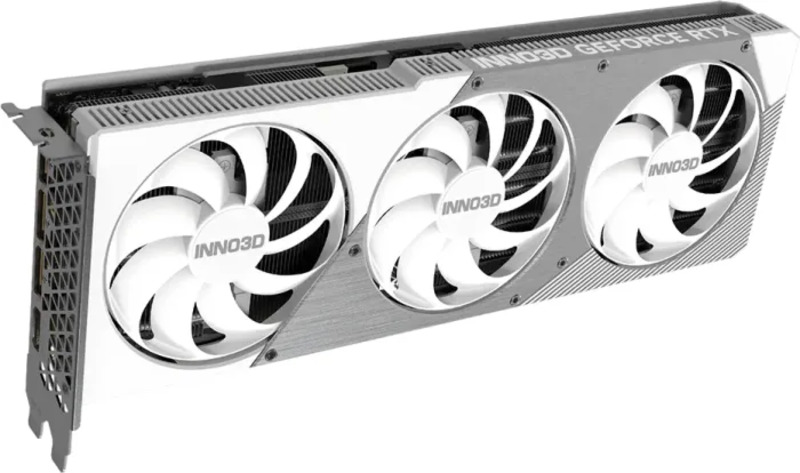


| Model | NVIDIA GeForce RTX 5070 Ti |
| Memory | 16GB GDDR7, 256bit, 28Gbps, 1750MHz, 896GB/ââ¬â¹s |
| clock Base | 2300MHz |
| clock Boost | 2482MHz |
| overclock | +32MHz Boost |
| Cooling | 3x Axial-fan (88mm) |
| TDP/TGP | 300W (NVIDIA) |
| AI-Computing power | >1406 TOPS |
| GPU-Computing power | 44.48 TFLOPS (FP16), 44.48 TFLOPS (FP32), 0.69 TFLOPS (FP64) |
| Power connections | 1x 12V-2x6 (via adapter: 2x 8-Pin PCIe) |
| Connectors | 1x HDMI 2.1b, 3x DisplayPort 2.1b UHBR20 |
| Interface | PCIe 5.0 x16 |
| Special features | AI-acceleration, Backplate, white Build compatible (white colouring), NVIDIA GeForce SFF-Ready |
| total height | Dual Slot |
| Dimensions | 300x116x41mm (LxWxH) |
| Type | PCIe card (full height) |
| PCI slot bracket | full height |
| Chip-data | |
| Chip-Architecture | Blackwell (from 2025/ââ¬â¹Q1) |
| Chip-title | GB203-300 |
| Chip-Configuration | 70SM (8960SP /ââ¬â¹ 336TMU /ââ¬â¹ 128ROP), 70 RT Cores, 280 Tensor Cores, 64MiB L2 cache |
| Chip-Manufacturing Process | TSMC 4nm |
| Chip size | 378mm², monolithisch, 45.6 Mrd. Transistoren |
| Chip-functions | Raytracing (4th Gen NVIDIA RTX, 133 TFLOPS), NVIDIA Tensor (5th Gen, 1406 TOPS), HDCP 2.3 |
| API-support | DirectX 12 Ultimate (12_2) /ââ¬â¹ CUDA 12.8 /ââ¬â¹ Vulkan 1.3 /ââ¬â¹ OpenCL 3.0 /ââ¬â¹ OpenGL 4.6 /ââ¬â¹ Shader Model 6.8 |
| Transcoding-Engine | 2x NVENC (9th Gen, max. Sessions: 8), 1x NVDEC (6th Gen), Info |
| encoding | AV1, H.265 (4K YUV 4:2:0 /ââ¬â¹ 4K YUV 4:4:4 /ââ¬â¹ 4K Lossless /ââ¬â¹ 8K /ââ¬â¹ HEVC 10bit support /ââ¬â¹ HEVC B Frame support), H.264 (YUV 4:2:0 /ââ¬â¹ YUV 4:4:4 /ââ¬â¹ Lossless) |
| decoding | AV1 (8bit /ââ¬â¹ 10bit), H.265 (8bit 4:2:0 /ââ¬â¹ 10bit 4:2:0 /ââ¬â¹ 12bit 4:2:0 /ââ¬â¹ 8bit 4:4:4 /ââ¬â¹ 10bit 4:4:4 /ââ¬â¹ 12bit 4:4:4), H.264, VP9 (8bit /ââ¬â¹ 10bit /ââ¬â¹ 12bit), VP8, VC-1, MPEG-2, MPEG-1 |
| Multi-GPU-Interface | - |
| Vorstellung (series) | 06.01.2025, Marktstart: 02.2025, UVP: 749 USD/ââ¬â¹879 EUR (NVIDIA) |
| Graphics | NVIDIA GeForce RTX 5070 Ti - 16GB GDDR7 - desktop |